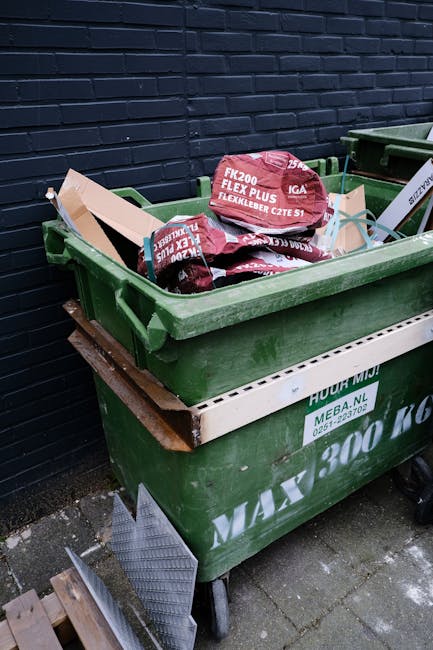
Wealdstone Furniture Disposal Guide for Harrow Residents
If you are dealing with an old sofa, a heavy wardrobe, or a whole room full of unwanted pieces, furniture disposal can quickly go from a simple chore to a logistical headache. This Wealdstone furniture disposal guide for Harrow residents walks you through the practical options, common pitfalls, and smarter ways to clear bulky items without wasting time, money, or energy.
Wealdstone and the wider Harrow area have plenty of typical disposal challenges: narrow stairwells, limited parking, shared entrances, and furniture that is too large for a standard car. That is why the best approach is usually not just "how do I get rid of it?" but "how do I do it safely, legally, and with the least disruption?"
In the sections below, you will find a clear breakdown of how furniture disposal works, when a professional service makes sense, what to avoid, and how to plan the job properly. If you want to compare service types as you read, it can also help to look at a dedicated furniture disposal service in Harrow or broader options such as general waste removal and house clearance.
Table of Contents
- Why furniture disposal matters in Wealdstone and Harrow
- How the disposal process works
- Key benefits and practical advantages
- Who this is for and when it makes sense
- Step-by-step guidance
- Expert tips for better results
- Common mistakes to avoid
- Tools, resources and recommendations
- Law, compliance, standards and best practice
- Options, methods and comparison table
- Case study / real-world example
- Practical checklist
- Conclusion
- Frequently asked questions
Why Wealdstone Furniture Disposal Guide for Harrow Residents Matters
Furniture is one of the most awkward waste streams to manage at home. It is bulky, often heavy, and usually difficult to break down without tools or time. A wooden bed frame may fit in pieces, but a bulky sofa, a filing cabinet, or a mirrored wardrobe can cause problems long before you reach the front door.
For Harrow residents, the issue is not only size. There is also the practical reality of local housing layouts. Flats above shops, maisonettes, terraces, and managed blocks often have shared access, which means you need to think about timing, noise, lifting, and safe movement through communal areas. If the item cannot be moved safely, the cheapest option on paper may become the most expensive in practice.
There is also an environmental angle. Reuse and recycling are usually preferable to disposal where suitable, but not every item can be resold or donated. A sensible disposal plan helps keep usable items in circulation and reduces the amount sent for final waste treatment. That is one reason many residents prefer services with a clear recycling focus, such as recycling and sustainability commitments.
Practical takeaway: Good furniture disposal is not just about removal. It is about choosing the safest route for the item, the property, and the people involved.
In real life, the biggest frustrations tend to be delay and uncertainty. "Can they take this?" "Will it fit down the stairs?" "What happens if it is too heavy?" Those questions matter because a poor plan can lead to missed appointments, damaged walls, and avoidable stress. The goal here is to help you avoid that mess from the start.
How Wealdstone Furniture Disposal Guide for Harrow Residents Works
Furniture disposal usually follows one of four routes: reuse, donation, recycling, or disposal. The right route depends on condition, size, material, and how urgently you need the item removed.
1. Assess the item properly
Start by checking whether the furniture is still usable. A dining table with minor cosmetic marks may be suitable for resale or donation. A sofa with broken springs, rips, or contamination may need to go straight to disposal. If the item contains mixed materials, such as metal, fabric, foam, and wood, it may require dismantling before it can be handled efficiently.
2. Decide whether you can move it yourself
Some pieces are manageable with two adults, gloves, a trolley, and good lifting technique. Others are not. If you live on an upper floor, have tight turns, or need to move items through a shared hallway, professional help is often the safer route. This is especially true for heavy cabinets, large mattresses, wardrobes, and corner sofas.
3. Choose the disposal route
For many households, the choice comes down to convenience versus effort. Council collections may suit some items and schedules, but they are not always the fastest option. Donation can be a good choice when furniture is in good condition, though pick-up availability varies. A private clearance service is typically the quickest route when you need several items removed in one visit.
If you are comparing service scopes, a broader furniture clearance service may be better than item-by-item disposal because it handles multiple pieces at once and reduces repeated handling.
4. Prepare the property
Clear a path to the item. Remove rugs, move small obstacles, and make sure doors can open fully. If possible, measure door frames and stair widths before the collection day. That one small step can save a great deal of uncertainty. You do not want to discover that the wardrobe has to be angled like a chess puzzle at the front door.
5. Arrange the collection or drop-off
Once you know what is going and how it needs to be moved, schedule the removal. Good operators will usually ask for photos or a short description so they can estimate access, labour, and vehicle space more accurately. If payment, booking, or site access needs to be discussed in advance, it is worth reviewing the provider's pricing and quotes information and payment and security page.
Key Benefits and Practical Advantages
When furniture disposal is handled properly, the benefits are wider than simply reclaiming space. You also reduce risk, save time, and avoid repeated lifting.
- Less stress: You are not trying to organise transport, helpers, and disposal all at once.
- Safer handling: Trained teams can manage awkward loads and protect floors, walls, and entrances.
- Better time control: One visit can remove multiple items faster than making several trips.
- Cleaner outcome: The room is usable again sooner, whether you are redecorating, moving, or replacing furniture.
- Potential reuse: Some items can be redirected for reuse, depending on condition and service options.
- Clearer budgeting: A proper quote helps you understand labour, access, and disposal expectations before work starts.
For landlords, letting agents, and busy households, speed matters. A cleared room can make all the difference before a tenant move-in, sale, refurbishment, or deep clean. The same is true for commercial spaces that need to clear old desks, shelving, or breakroom furniture; in that case, office clearance may be more appropriate than a simple one-off collection.
Who This Is For and When It Makes Sense
This guide is useful for anyone in Wealdstone or the wider Harrow area who needs to move on furniture without hassle. In practice, that includes a lot of people:
- Homeowners replacing old sofas, beds, wardrobes, or tables
- Renters clearing a flat at the end of a tenancy
- Landlords preparing a property for new occupants
- Families dealing with inherited furniture after a move or bereavement
- Students and sharers leaving behind awkward items that do not fit in a car
- Small businesses removing reception furniture, filing cabinets, or desks
It also makes sense whenever the item is too heavy, too large, or too inconvenient to move yourself. A bulky item may seem manageable at first, but if it needs to come down stairs, through a narrow hallway, or out past parked cars, the task gets more complicated quickly. That is usually the moment people realise the job is bigger than a standard household trip to the tip.
If the project involves multiple rooms, consider whether a broader service such as home clearance, flat clearance, or even garage clearance would be more efficient than tackling furniture one piece at a time.
Step-by-Step Guidance
If you want the process to run smoothly, treat furniture disposal as a small project. The steps below are simple, but they work.
- List every item you want removed. Note the size, material, and condition of each piece.
- Check access carefully. Measure doorways, stairwells, lifts, and any tight corners.
- Separate reusable and non-reusable items. This helps you decide whether donation or disposal is more realistic.
- Take clear photos. Pictures of the item and access route are often more useful than a long description.
- Request a quote early. Good quotes are easier to compare when they are based on accurate information.
- Prepare the area. Move smaller items out of the way and protect surfaces if necessary.
- Confirm timing and payment. Avoid surprises on the day by checking the practical details in advance.
- Inspect the cleared space. Make sure nothing has been left behind and that access routes are left tidy.
A small but useful habit is to tag items with sticky notes or place them in one designated area if they are all going. That sounds obvious, but it stops confusion when a room contains both keep and remove items. It is especially handy in multi-occupancy homes where everyone has a different idea of what is "obviously rubbish."
Expert Tips for Better Results
Good disposal results come from planning, not luck. These practical tips make a noticeable difference.
Tip 1: Photograph access, not just the furniture
A clear photo of the staircase, lift, hallway, or parking situation can be more helpful than a photo of the item alone. Access issues often determine the amount of labour needed.
Tip 2: Disassemble only where it genuinely helps
Breaking down a bed frame or wardrobe can save time, but only if you have the right tools and know how to do it safely. If you are removing drawer units or fitted furniture, rushed dismantling can cause damage and make handling worse.
Tip 3: Keep reusable parts together
Screws, brackets, and fixings are easy to lose. Put them in a labelled bag if the item might be reused, repaired, or donated.
Tip 4: Think about the route out of the property
In some properties, the item fits the room but not the hallway turn. That is the sort of detail that gets overlooked until collection day. Measuring the turning point can save a lot of frustration.
Tip 5: Ask about handling and disposal standards
Trustworthy providers should be willing to explain how they handle lifting, sorting, and disposal. If they also publish their health and safety approach and insurance and safety information, that is a good sign they take the work seriously.
Where possible, choose a provider that treats the job as more than a simple haul-away service. A careful team will think about access, protection, sorting, and the final destination of the materials. That is the difference between a rushed collection and a proper clearance.
Common Mistakes to Avoid
Most furniture disposal problems are avoidable. The most common mistakes are practical, not dramatic.
- Underestimating weight and bulk: A "small" sofa can still be awkward on stairs.
- Assuming everything can be lifted in one go: Furniture often needs careful turning or partial dismantling.
- Ignoring access constraints: Tight hallways, lifts, and parking rules can change the whole job.
- Leaving sorting until the last minute: Mixed keep/remove piles create confusion and slow everything down.
- Choosing solely on price: The cheapest option may not include the handling you actually need.
- Forgetting about reuse value: Some items can still be useful elsewhere if they are in good condition.
- Not checking what is excluded: Some items may need separate handling depending on their condition or materials.
Another common problem is assuming that all furniture can be removed with the same level of effort. A bedside table is not a three-door wardrobe. That distinction sounds obvious, but in busy households it gets overlooked more often than you might think.
Tools, Resources and Recommendations
You do not need a workshop to manage disposal properly, but a few practical tools make a big difference.
- Tape measure: Useful for door widths, stair turns, and item dimensions.
- Camera or phone: Helps you capture item condition and access points.
- Strong gloves: Helpful for minor handling tasks and protection from splinters or sharp edges.
- Trolley or sack truck: Handy for lighter items on flat surfaces, though not always suitable for stairs.
- Labels or tape: Good for marking what stays and what goes.
- Heavy-duty bags or boxes: Useful for loose fittings, cushions, and small dismantled parts.
When choosing a service, look for transparency around booking, scope, and aftercare. If a provider also has clear pages for about us, contact us, and complaints procedure, it is easier to judge whether they are organised and accountable.
For properties that need more than just a single item removed, browsing related services can be helpful. For example, loft clearance is useful where old furniture has been stored upstairs, while builders waste clearance may be relevant if the furniture removal is part of a refurbishment.
Law, Compliance, Standards, or Best Practice
Furniture disposal in the UK is not just a matter of convenience. It needs to be handled responsibly, especially when items are no longer fit for reuse. While the exact rules depend on circumstances and service type, there are a few sensible standards to keep in mind.
First, you should avoid leaving furniture out in a way that obstructs pavements, shared entrances, or communal areas. That can cause safety issues and inconvenience neighbours. Secondly, if you are using a contractor, it is reasonable to expect that they will handle waste responsibly and pass it through appropriate channels rather than dumping it unlawfully. Reputable providers typically explain their sorting and disposal approach clearly.
Thirdly, if furniture may contain hazardous components, contamination, or special materials, it should be treated with extra care. For example, damaged items with mould, sharp fixings, broken glass, or concealed hardware should not be handled casually. Best practice is to disclose those issues up front so the collection can be planned safely.
Finally, if you are comparing providers, look for signs of professionalism: public policies, insurance detail, clear pricing, and a straightforward process. A company that publishes useful information on terms and conditions and privacy policy is usually taking the administrative side of the job seriously as well.
Expert summary: The best disposal plan is the one that is safe, transparent, and proportionate to the amount of furniture you need removed. It should also match the access reality of your property, not just the item list.
Options, Methods, or Comparison Table
There is no single best method for every household. The right choice depends on your timeline, the item's condition, and how much work you want to do yourself.
| Option | Best for | Pros | Trade-offs |
|---|---|---|---|
| Reuse or donation | Good-condition items | Can extend item life, often the most sustainable route | Collection may not be immediate; items must meet acceptance criteria |
| Self-transport to a disposal point | Smaller loads and those with access to a suitable vehicle | Direct control over timing | Heavy lifting, transport hassle, and multiple trips may be needed |
| Private furniture clearance | Bulky, awkward, or multiple items | Fast, convenient, and suited to staircases and tight access | Usually higher cost than doing it yourself |
| Broader home or flat clearance | Several rooms or entire properties | Efficient for larger clear-outs and end-of-tenancy jobs | May be more service than you need for just one item |
If your furniture is just one part of a larger clear-out, a house clearance or home clearance can be more time-efficient than arranging separate collections. That is especially true if you are sorting loft, garage, and living room items at the same time.
Case Study or Real-World Example
Consider a typical Wealdstone flat: a second-floor property with a narrow staircase, one double bed base, a chest of drawers, and a worn sofa that has been sitting in the living room for months. The resident has a new delivery booked for the weekend and needs the old items removed before then.
At first glance, the resident thinks a friend with a van might be enough. Then the practical issues appear. The sofa is too heavy for one person to angle safely, the bed base needs dismantling, and the hallway is too tight to carry the drawers without scraping the wall. Parking outside is also limited, which means repeated loading would take longer than expected.
After reviewing the access and item list, the resident arranges a professional collection. The team arrives with the right lifting equipment, removes the bed base in sections, protects the route where needed, and clears the items in one visit. The room is ready for the new furniture delivery, and the resident avoids spending half the day wrestling with a wardrobe at the top of the stairs.
That example is ordinary, not dramatic. But ordinary is where most good disposal planning matters. The best outcome is often the quiet one: no damage, no delays, no drama.
Practical Checklist
Use this checklist before arranging any furniture disposal in Wealdstone or Harrow.
- List every item that needs to go
- Check whether any piece could be reused or donated
- Measure the item and the access route
- Take photos of the furniture and the stairs/hallway
- Confirm whether dismantling is needed
- Move small obstacles out of the way
- Protect floors or walls if access is tight
- Ask about pricing, timing, and what is included
- Check whether the provider handles recycling where possible
- Make sure the collection day fits your schedule and building rules
- Keep important screws, fittings, or accessories in one bag
- Inspect the cleared area once the job is complete
This simple routine stops most avoidable problems. It also makes it much easier to compare quotes because you can describe the job properly instead of guessing.
Conclusion
Furniture disposal does not need to become a weekend-consuming ordeal. With a little planning, most Harrow residents can choose the right route for their item, protect their property, and avoid unnecessary lifting or transport problems. The key is to think beyond the object itself and consider access, time, condition, and disposal route together.
For one item, a simple removal plan may be enough. For multiple bulky pieces, a professional clearance service is often the calmer, safer choice. Either way, the best result comes from clear information and realistic expectations. That is what this guide is designed to give you.
If you are ready to move forward, compare your options, gather a few photos, and request a tailored estimate from a local provider. If the job is larger than expected, a full furniture clearance or broader clearance service can save far more time than trying to manage it piece by piece.
Get a free quote today and see how much you can save.
Frequently Asked Questions
What is the easiest way to dispose of old furniture in Wealdstone?
The easiest method depends on condition and access. If the item is bulky or difficult to move, a professional furniture disposal or clearance service is usually the simplest option.
Can I leave furniture outside for collection?
Only if the collection has been arranged and the placement does not create an obstruction or safety issue. In shared areas, it is better to confirm the exact process first.
How do I know whether my furniture can be reused?
Check for structural damage, stains, mould, broken frames, or major wear. If the piece is clean and stable, it may be suitable for reuse or donation.
Is it cheaper to dispose of furniture myself?
Sometimes, yes. But once you factor in vehicle hire, fuel, lifting effort, parking, and time, self-disposal is not always the cheaper option in real terms.
What types of furniture are hardest to remove from flats?
Large wardrobes, corner sofas, divan beds, and heavy cabinets tend to be the most awkward, especially in stair-only buildings or tight hallways.
Do I need to dismantle furniture before collection?
Not always. Dismantling can help with access, but it is only worth doing if it is safe and practical. Many collection teams can handle dismantling on site.
How long does a typical furniture disposal job take?
Smaller jobs may take a short visit, while multi-item or access-heavy collections take longer. The time needed depends more on access and item size than on quantity alone.
What should I ask before booking a clearance company?
Ask what is included, how access affects pricing, whether they are insured, how they handle recycling, and whether photos are needed for an accurate quote.
Can old furniture be recycled?
In many cases, parts of furniture can be sorted for recycling, depending on the materials and the item's condition. Mixed-material pieces may require more careful handling.
What if I only need one item removed?
Even a single item can be worth arranging professionally if it is heavy, awkward, or impossible to move safely without help. One difficult sofa can be more trouble than three smaller items.
Is furniture disposal different for landlords and tenants?
Yes, mainly in terms of timing, responsibility, and end-of-tenancy expectations. Landlords often need fast, tidy clearance between occupancies, while tenants may be focused on moving out efficiently.
Where can I find more information about a provider's standards?
Look for pages covering company background, safety, insurance, pricing, sustainability, and complaints handling. These are useful indicators of how the business operates day to day.