Office Clearance in Harrow

Office Clearance Harrow provides a practical service for businesses that need workspaces, storage rooms, desks, cabinets and general office contents removed with care. The focus is on organised clearance rather than disruption, so the work can be planned around access, building rules and the type of items being taken away. Whether you are reducing surplus furniture, closing a site, or simply opening up space again, the service is shaped to keep the process clear and manageable.
We handle a wide range of commercial clearance tasks, from individual items through to larger office furnishings and mixed contents. That can include desks, chairs, shelving, filing units, reception items and non-sensitive workplace equipment. Careful separation of materials helps ensure that reusable and recyclable items are treated appropriately, while anything unsuitable for reuse is removed in a controlled way. For many customers, the main advantage is a straightforward route from cluttered rooms to usable floorspace.
To request a quotation, it helps to outline the size of the area, the kinds of items involved and any access details that may affect loading. If you already know which rooms need clearing, that can make it easier to plan the work, but it is still worth asking about mixed contents or awkward items. Clear information usually leads to a more accurate estimate, especially where office furniture, storage units and light waste are all part of the same job.
Commercial Clearance for Offices, Workrooms and Storage Areas
Our office clearance service is designed for spaces that need a full or partial emptying rather than a simple item removal. That may involve open-plan offices, private rooms, meeting spaces, archives, back offices or storerooms that have become difficult to use efficiently. We can remove everyday furniture and other non-permanent contents, making it easier to prepare for redecoration, reconfiguration, a move or a change in occupancy.
Different workplaces often need different approaches. Some clearances are best handled room by room, especially where furniture has to stay in use elsewhere until the last moment. Others are better tackled as a single coordinated job, particularly when several floors, departments or storage spaces are involved. The important part is matching the method to the layout, the load type and the access available on the day.
Typical items within an office clearance
Office clearances commonly include desks, chairs, conference tables, cupboards, shelving, pedestal units, reception furniture, small soft furnishings and general workplace fittings. In some cases, there may also be boxed paperwork, outdated display items, broken office equipment or surplus stock stored away in cupboards and corners. We can help remove these contents so the area can be handed over in a tidier, more usable condition.
Furniture Removal, Reuse and Disposal Options
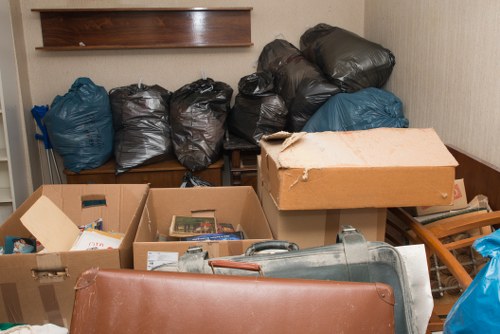
Office clearances often centre on furniture, and that can require a more considered approach than lifting out a few loose items. Flat-pack desks, modular storage, task chairs and larger meeting tables may need dismantling or careful handling to move without damaging walls, floors or door frames. When the job involves mixed furniture types, we work in a way that keeps the removal orderly and efficient.
Where appropriate, we look at whether items can be separated for reuse, recycling or disposal. That can be especially useful for workplaces that are replacing older furniture with a different layout rather than discarding everything at once. A measured approach supports better sorting and can help keep the clearance focused on what genuinely needs to leave the site. If you are comparing options, our furniture clearance page gives a useful overview of the type of work involved.
Some projects also include items that are no longer suitable for office use but are still part of the same room clearance. In those cases, we can remove mixed loads in a planned sequence rather than leaving the customer to sort every piece in advance. For broader waste that sits alongside furniture, the waste removal service explains how we approach general non-hazardous loads.
Planning Around Access, Timing and Building Rules
Office clearances are often affected by practical details that are easy to overlook at first. Lifts, stairs, narrow corridors, loading bays, controlled entry systems and shared building rules can all influence how the work is carried out. A sensible plan makes it easier to avoid unnecessary delays and to keep the removal moving in an organised order. That is one reason why commercial clearances benefit from a proper review before the job begins.
If you are arranging a quotation, it is useful to mention where the items are located, whether parking or loading access is limited, and whether the clearance needs to fit around trading hours or shared premises rules. For larger jobs, a simple description of room numbers, floor levels and the type of contents can help shape the most suitable approach. You do not need to prepare everything yourself, but a little structure can make the process smoother.
- List the main rooms or storage areas to be cleared.
- Note bulky furniture, fragile items or anything fixed in place.
- Explain access constraints such as stairs, lifts or restricted loading.
- Mention any preferred timing if the clearance must fit around operations.
What Office Clearance Can Include
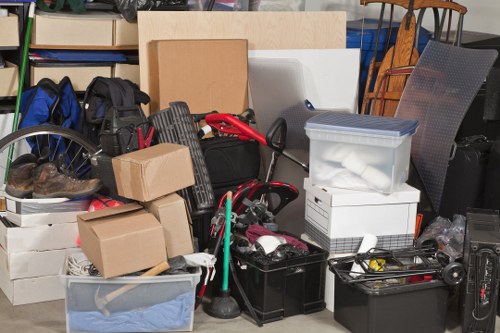
Office clearance covers more than removing a few unwanted desks. Depending on the site, it may include dismantling selected furniture, carrying items from upper floors, separating reusable pieces from general waste and clearing objects that have accumulated in cupboards or side rooms. The service is useful when an area needs to be reset in a practical way, not simply swept through quickly. The aim is to leave the space ready for what comes next.
Many customers use office clearance when a business is moving, reducing its footprint, updating furniture or clearing rooms that have become overloaded with stored items. Others need help with outdated fixtures, reception furniture or surplus items left after a restructure. We can deal with these mixed contents in a sensible sequence so the larger, heavier or more awkward items are handled safely and the smaller items are not left behind to create extra work.
Where office contents are mixed with general rubbish or light non-hazardous waste, the work can be planned as one clear-out rather than multiple separate collections. That saves confusion when several categories of item are present in the same rooms. For customers with larger domestic-style clearances, our home clearance page may also be useful, while the flat clearance page is relevant where access or layout is tighter.
Keeping Clearance Work Organised and Respectful of the Premises
A professional office clearance should respect the building as well as the contents. Floors, corners, walls and entrances can all be vulnerable when heavy furniture is moved, so it matters that the work is handled in a controlled sequence. Good organisation reduces avoidable contact with the premises and helps the space remain presentable during the process. That is especially relevant in shared business buildings where other occupants may still be using nearby areas.
We also understand that office clearances often happen in active or semi-active workplaces rather than empty buildings. The work therefore needs to suit the setting, whether that means clearing one room at a time, working around remaining equipment or removing only selected categories of items. If an area contains filing cabinets, shelving or furniture that must stay in place until the end, the sequence can be adjusted accordingly. For customers who need other workplace-related removal work, our business waste removal page offers a broader view of support for commercial sites.
When the job is more specialised, such as a storage-heavy back office or a room full of mixed office items, it is useful to separate the clearance into sensible sections. That approach helps keep the task manageable and makes it easier to see what has been removed, what remains and what still needs to be agreed. It can also be helpful where there are several different people involved in managing the premises.
About Harrow

Harrow is a northwest London area with a long-established identity shaped by both suburban growth and older historical landmarks. At its centre is Harrow on the Hill, a prominent hilltop settlement with views across the surrounding district and a street pattern that reflects its older development. The hill is closely associated with Harrow School, founded in 1572, whose buildings and grounds remain one of the best-known features of the area. The contrast between the historic hilltop and the busier lower town is one of Harrow’s defining characteristics. Over time, the district expanded through railway and road connections, with places such as Harrow & Wealdstone and North Harrow becoming important parts of its urban fabric. The local railway history includes the well-known Harrow & Wealdstone station, a major interchange that links the area into wider London. Harrow also has a varied religious and cultural landscape, reflected in churches, mosques, temples and community organisations that serve a diverse population. Green spaces add another layer to the area’s character, including Harrow Recreation Ground and smaller parks woven through residential neighbourhoods. The local landscape combines steep historic lanes, suburban streets, civic buildings and commercial centres, creating a place that feels both metropolitan and locally distinct. This mix of heritage, transport links, shopping streets and open space gives Harrow a layered identity within northwest London.
Clearances for Moves, Changes and Refits
Office clearance is often part of a bigger transition. A business might be moving to a new site, changing the layout of existing rooms or replacing worn-out furniture before a refit. In those situations, the clearance needs to support the overall plan rather than interrupt it. We can work from a clear list of rooms or items, or help with a broader clearance where the priority is simply to empty and simplify the space efficiently.
Some projects are straightforward and others are more layered, especially when old furniture, packaging, loose fittings and stored materials have all built up together over time. Where needed, items can be sorted into a practical sequence so that the clearance is not slowed by repeated handling. Clear separation of what stays and what goes is helpful when the building is still in use or when different rooms have different deadlines. For smaller or more specialist jobs, our loft clearance and garage clearance pages may also be relevant if storage spaces need attention alongside office areas.
Good planning also makes it easier to quote accurately. A concise description of the rooms, items and access details is usually enough to start a conversation, and it is better to mention anything awkward at the outset than to discover it later. If the job is still developing, a rough outline is fine to begin with. Start with the main rooms and the main item types, then expand from there as the plan becomes clearer.
Flexible Clearance for Different Business Setups
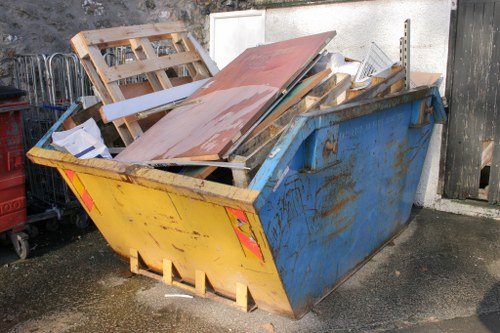
Not every office is arranged in the same way, so the clearance method needs to reflect the premises rather than forcing a one-size-fits-all approach. Some businesses occupy a single suite with compact rooms, while others use larger floors with a mixture of desks, meeting areas, records storage and support spaces. The work can be adapted to suit open-plan layouts, partitioned rooms or mixed-use commercial areas where the furniture and contents vary from one section to another.
In some cases, the main challenge is volume; in others, it is the type of item or the route it has to take out of the building. Filing systems, shelving, conference furniture and older office cabinets all present slightly different handling needs. By approaching the clearance in a structured way, we can remove the contents without making the rest of the premises more difficult to use than necessary. If you are also reviewing disposal options for other furnishings, our furniture disposal page explains the service in more detail.
If you would like to compare the main service pages before requesting a price, you can also look at office clearance for the core service information and pricing and quotes for the practical next step. Ask for a quotation when you are ready, and include whatever detail you already have so the response can reflect the scale and shape of the work.
Service Focus and Supported Related Work
Our office clearance work concentrates on removing non-hazardous office contents and making the process as orderly as possible. That means we are best suited to furniture, fixtures and mixed room contents that need to be cleared for operational or organisational reasons. The service does not depend on every item being in perfect condition, and it can still be useful when the office contains a mixture of usable items, damaged furniture and general clutter that has built up over time.
Depending on the site, related work may also involve adjoining storage rooms, back offices, reception areas or other commercial spaces that share the same clearance requirement. The important thing is keeping the scope realistic and well described. Where a business wants to understand more about our approach to handling removed items, the recycling and sustainability page sets out the broader principles we follow when sorting appropriate materials. Support for sensible sorting is part of making the work practical, not promotional.
There may be cases where a customer needs multiple services across one property, such as office contents together with broader premises clearance. In those circumstances, it is usually best to identify the main priority first and then discuss the secondary work alongside it. That keeps the quotation process clear and reduces the chance of overlooking bulky or awkward items. When you are ready to move forward, request a quotation here.