What to do if someone fly-tips on your Harrow street
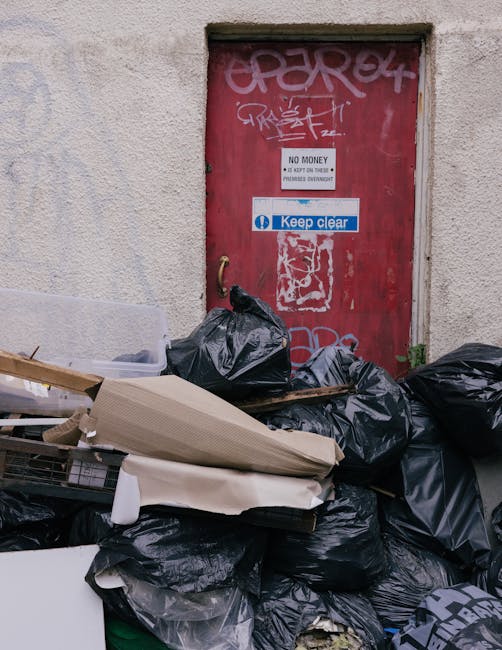
If you've stepped outside on a quiet Harrow morning and spotted black sacks, broken furniture, or a pile of builder's waste dumped on your street, you'll know the feeling. It's frustrating, it looks awful, and it can quickly turn into a bigger problem if nobody deals with it properly. This guide explains what to do if someone fly-tips on your Harrow street, how to report it, what evidence helps, when removal is urgent, and how to reduce the chances of it happening again.
Truth be told, fly-tipping is one of those nuisances that feels small until you have to live with it. The smell drifts, bags tear open, foxes get interested, and suddenly the pavement is no longer just a pavement. The good news? You do have options, and taking the right steps early can make a real difference.
In this article, you'll find a practical step-by-step process, a checklist, common mistakes to avoid, and a clear overview of the most sensible next move for residents, landlords, businesses, and local property managers in Harrow.
Why What to do if someone fly-tips on your Harrow street Matters
Fly-tipping is more than an eyesore. It can block pathways, attract vermin, create sharp hazards, and make residents feel like their street has been left behind. On a practical level, dumped waste can also encourage more dumping. One bag becomes three, then a mattress, then a builder's skip-load left overnight. It happens quickly.
For Harrow streets, the impact is often very visible because many roads are busy, mixed-use, and close to homes, shops, schools, or shared access points. That means a dumped pile can affect more people than you might think. If waste is left near parking bays, narrow pavements, alleyways, or front gardens, it may also make everyday access awkward for neighbours, delivery drivers, and emergency services.
There is also a trust issue. When rubbish sits too long, people start assuming nobody is looking after the street. That can create a knock-on effect, where litter increases and people stop reporting problems because they feel nothing will happen. To be fair, that's understandable. But it is exactly why a quick, organised response matters.
If you want broader support with waste management around a property, you may also find it useful to look at house clearance services or, where the problem is tied to a move or empty property, end of tenancy cleaning in London. Those are different from fly-tipping response, but they can help reduce waste pressure before it becomes a street issue.
How What to do if someone fly-tips on your Harrow street Works
The response to fly-tipping usually has two parts: reporting and removal. In some cases, the council will handle the site if it is on public land. In others, the landowner or occupier may need to arrange clearance, especially if the waste is on private land such as a driveway, yard, shared forecourt, or rear access way.
The first step is identifying where the waste sits. That sounds obvious, but it matters. A pile on the pavement, verge, or roadway may sit within the council's cleaning responsibility. A pile just inside a private boundary is usually a different matter. If you are not sure, treat it cautiously and gather details before moving anything.
Then comes evidence. If it is safe, take photos from a sensible distance, note the location, and record the time and date. Don't rummage through the waste unless you have a genuine reason and it is safe to do so. Sometimes a delivery label, business name, or distinctive item can help identify where the waste came from. Sometimes it cannot. That's normal.
Removal depends on urgency, quantity, access, and who owns the land. Small items might be cleared quickly. Larger loads, bulky furniture, and construction waste often need a proper collection. If you are dealing with a blocked access route or repeated dumping, a more structured clearance plan usually works better than a one-off tidy-up.
Where residents need support with wider waste issues, such as a cluttered garage or an inherited property, it can help to compare services like garage clearance services and bereavement house clearance. Different situations, yes, but the same principle applies: remove the source pressure, not just the visible mess.
Key Benefits and Practical Advantages
Acting quickly after a fly-tip gives you a few real advantages, and they are not just cosmetic.
- You reduce the chance of more dumping. A cleared, monitored space is less likely to attract additional waste.
- You protect neighbours and passers-by. Broken glass, needles, damp waste, and unstable piles can all be risky.
- You make reporting more effective. Better photos and notes usually lead to better follow-up.
- You keep access open. This matters for bins, deliveries, parking, and day-to-day movement.
- You support cleaner local living. Small actions have a surprisingly big effect on how a street feels.
There's also a quieter benefit. When residents see that a street is being looked after, they are more likely to care about it themselves. That sounds soft, maybe, but it is one of the more practical truths in local neighbourhood management. People tend to mirror the standard they see.
For landlords and managing agents, a fast and tidy response can also help maintain the condition of a property and reduce complaints. If a property has become cluttered or difficult to manage, services such as hoarder house clearance or garage clearance in London may be relevant depending on the source of the waste.
Who This Is For and When It Makes Sense
This advice is for anyone dealing with dumped rubbish on a Harrow street, but the exact next step depends on your role. A resident usually wants safe reporting and quick removal. A landlord may need to protect access and document the issue. A business owner may need to prevent repeat dumping at the rear of a site. A managing agent may need to coordinate access, insurance, and contractors without delaying the cleanup.
It also makes sense to use this guidance if you are looking after:
- a terraced street with shared front areas
- a block of flats with communal bins or rear lanes
- a shopfront or mixed-use parade
- a driveway or forecourt that has become an informal dumping spot
- a vacant property where waste keeps appearing
In our experience, the most common trigger is not one huge incident. It's a pattern. A bit of rubbish by the wall. A mattress left after dark. A few bags near a bin store. Then, before you know it, the area looks neglected. So if you are seeing repeated waste, don't wait for it to become "a bigger job". That bigger job is often much more expensive and annoying. Let's face it.
If your issue is tied to clearing rooms, lofts, or outbuildings before waste gets dumped outside, the broader property services pages like property clearance services and house clearance may help you reduce the root cause.
Step-by-Step Guidance
Here is a sensible way to handle a fly-tip on your Harrow street without making the situation worse.
1. Check for immediate danger
Before anything else, look for broken glass, sharp metal, chemical containers, syringes, or waste that has spread into the road. If the pile is spilling into traffic or blocking a walkway, treat it as urgent. Keep children, pets, and curious neighbours away. Not glamorous, but necessary.
2. Take clear photos
Use your phone to take a few pictures from different angles. Include the full pile and the surrounding street so the location is obvious. If possible, capture any identifying details such as packaging, logos, or labels. Don't move things around just to get a better shot.
3. Note the exact location
Write down the street name, nearest house number, landmarks, and whether the waste is on public or private land. If it is on a boundary, say so. That detail can save time later.
4. Record the date and time
Time matters. A fresh fly-tip may be easier to link with a vehicle, witness, or CCTV than something that has sat there for days. If you saw suspicious activity, note that too. A van parked oddly at 11:30 pm. Several bags carried one by one. Small details count.
5. Report it through the right route
Use the proper local reporting channel if the waste is on public land. If it is private land, contact the landowner, landlord, managing agent, or a professional clearance provider. Reporting to the wrong party can delay everything, which is annoying and, frankly, common.
6. Decide whether the waste needs urgent removal
If the waste poses a safety risk, smells strongly, attracts pests, or blocks access, it should be prioritised. Bulky items left for long periods can also invite more dumping. A quick decision here often saves a bigger mess later.
7. Arrange a proper clearance if needed
For large, mixed, or awkward waste, a structured clearance is usually better than trying to shift it in stages. That is especially true if the pile includes construction material, furniture, or items that need careful handling. If the waste came from a property that has been left full or neglected, you may also want to explore property clearance or domestic clearance options.
8. Prevent the same spot being used again
Once the waste has gone, think about lighting, access, bin storage, signage, and whether the area is too easy to access after dark. A single fix rarely solves repeat dumping on its own.
Practical summary: photograph the waste, record the location, report it through the right channel, and arrange prompt removal if the pile is unsafe, offensive, or likely to attract more dumping. That simple sequence usually works best.
Expert Tips for Better Results
If you want better outcomes, the small details matter more than people think. Here are the practical bits that often make the difference.
- Photograph before daylight fades. Evening shadows can hide useful details. Early action helps.
- Do not open sealed bags unless it is safe and lawful to do so. You may expose yourself to unpleasant or hazardous waste.
- Keep a record if dumping repeats. Pattern data is helpful even when one-off evidence is weak.
- Separate what is known from what is suspected. It is fine to say "I think this may be from nearby work" rather than guessing confidently.
- Check access arrangements before booking removal. Narrow front paths, shared gates, and basement access can change the whole job.
A small bit of human advice here: don't let a fly-tip sit in your mind for days. People do that all the time. They hope it will go away, and it rarely does. Even a simple report and photo set is better than waiting and forgetting. Small action, better outcome.
If the waste seems linked to a cluttered property, a neglected garage, or a probate situation, clearing the source can be just as important as clearing the street. That is where pages like garage clearance services and bereavement house clearance are often relevant.
Common Mistakes to Avoid
Fly-tipping causes enough hassle on its own. These are the mistakes that tend to make it worse.
- Ignoring it for too long. The longer waste sits, the more likely it is to spread, smell, or attract further dumping.
- Moving unknown items without thinking. Some waste is sharp, contaminated, or unexpectedly heavy.
- Forgetting to note the exact location. A vague report like "near my house" is harder to act on.
- Assuming someone else has reported it. They may not have. If it affects you, report it.
- Trying to solve a private-land issue as if it were public land. That can waste time and delay removal.
- Using the same weak prevention approach again and again. If dumping keeps happening, the location needs a smarter fix.
Another one, and this is a classic: people sometimes tidy around the pile but leave the pile itself. It looks better for about twenty minutes, then the original problem is still there, sitting there like a bad decision in a bin liner.
Tools, Resources and Recommendations
You do not need fancy equipment to deal with fly-tipping, but a few simple tools make the process smoother.
- Smartphone camera for photos and timestamps
- Notes app for recording date, time, location, vehicle details, or witness comments
- Gloves if you are inspecting anything safe to inspect
- Hi-vis clothing if you need to stand near traffic or work with others near the road
- Bin bags and basic cleaning supplies for very minor litter around, but only if the waste is safe to handle
- Professional clearance support when the pile is too large, too mixed, or too risky
For larger jobs connected to a property, a sensible first step is often a broader clearance plan rather than a one-off response. You may find loft clearance services useful where clutter inside the property is feeding an outside dumping issue, and garage clearance in London useful where outdoor storage has got out of hand.
If the issue involves a whole house or a mixed collection of unwanted items, house clearance in London can be a more complete solution than trying to manage waste in pieces.
Law, Compliance, Standards, or Best Practice
Fly-tipping is taken seriously in the UK because dumped waste can create environmental, safety, and nuisance problems. The exact legal responsibility depends on where the waste is, who owns the land, and what type of waste has been left behind. That is why it is wise to be cautious rather than assume every case is handled the same way.
As a general rule, residents should avoid handling waste that may be hazardous, contaminated, or illegally deposited by a third party without proper precautions. Landowners and occupiers should keep records of what was found, what action was taken, and when the area was cleared. That helps with continuity if the issue repeats.
Best practice usually includes:
- keeping the site safe and accessible where possible
- recording evidence before any removal
- using lawful disposal routes only
- not mixing fly-tipped waste with general household waste if it requires separate handling
- taking extra care with sharp objects, chemicals, and electrical items
If you are responsible for a rental property, block, or commercial premises, it is sensible to stay on top of access, storage, and waste arrangements so rubbish does not build up in the first place. That is especially true where a property is being emptied, refurbished, or left vacant for a period of time.
One helpful way to think about compliance is simple: don't guess when waste may be dangerous, don't delay when access is affected, and don't assume a quick tidy is the same as proper disposal. It usually isn't.
Options, Methods, or Comparison Table
When dealing with fly-tipping on a Harrow street, the right response depends on location, urgency, and scale. This comparison can help you decide what makes sense.
| Option | Best for | Pros | Limitations |
|---|---|---|---|
| Report and wait for council action | Waste on public land that is not an immediate hazard | No direct removal burden; keeps records in the right system | May take time; not ideal if waste is worsening quickly |
| Private clearance service | Private land, repeat dumping, bulky loads, urgent access issues | Fast, flexible, suitable for awkward sites | Requires booking and, depending on the job, careful cost planning |
| DIY safe removal of minor litter | Very small, harmless items around the main pile | Quick for minor tidy-ups | Not suitable for mixed, heavy, or potentially hazardous waste |
| Site prevention changes | Repeated dumping spots | Reduces recurrence over time | Does not solve the immediate cleanup |
In real life, the best answer is often a combination: report the incident, arrange removal if required, and then fix the conditions that made the spot attractive in the first place. One action alone rarely finishes the job.
Case Study or Real-World Example
Here's a realistic example. A resident on a quiet Harrow street notices two bin bags, a broken chair, and a flattened cardboard box dumped near the kerb late on a Friday evening. By Saturday morning, a fox has torn one bag open and rubbish has drifted across the pavement. Nothing dramatic, but messy enough to annoy the whole row.
The resident takes photos before touching anything, notes the street name and nearest house number, and checks whether the waste is on the public pavement or just inside a front boundary. It appears to sit on the pavement, so it is reported through the appropriate local route. Because the chair is blocking pushchair access, the location is also described as a partial obstruction. That detail matters.
By afternoon, neighbours have stopped adding their own garden bags beside it, which is good. That is one of those small neighbourhood behaviours you only notice when it goes wrong. A cleaner confirms the area needs proper collection rather than piecemeal tidying because the rubbish is mixed and scattered. After removal, the resident mentions that the street's rear access is poorly lit. The block manager later checks whether better lighting and a clearer bin storage setup could reduce repeat dumping.
Nothing heroic. Just the right steps in the right order. And that is usually how these situations improve.
Practical Checklist
Use this checklist when you find fly-tipped waste on your Harrow street.
- Check whether anyone is in immediate danger
- Keep children, pets, and passers-by away from the waste
- Take clear photos from more than one angle
- Note the exact location and whether it appears to be public or private land
- Record the date, time, and any obvious identifying marks
- Report the incident through the right channel
- Assess whether the pile is urgent because of access, smell, pests, or safety risks
- Arrange proper clearance if the landowner or occupier is responsible
- Keep a record in case the dumping happens again
- Review prevention measures after the site is cleared
Quick rule of thumb: if the waste is unsafe, spreading, or blocking access, treat it as a priority rather than waiting to see what happens.
Conclusion
If someone fly-tips on your Harrow street, the best response is calm, quick, and practical. Secure the area, document what you can, report it properly, and arrange removal where needed. Then look one step further and ask why that spot was used in the first place. Was it easy to access? Poorly lit? Close to bins? Left unattended for too long?
That last question matters more than people think. Because once you understand the pattern, you can often stop the repeat problem, not just the visible mess. And that makes life better for everyone on the street, not just for the person who happened to notice it first.
If you're dealing with repeated dumping, a larger clear-out, or a property that needs a proper reset, getting specialist help early can save time, stress, and a fair bit of running around. Sometimes that is the difference between a one-off nuisance and a street that keeps looking cared for.
Get a free quote today and see how much you can save.
A tidy street changes the mood of a place more than you'd expect. A bit of action now can make the whole road feel lighter by tomorrow.
Frequently Asked Questions
What should I do first if I find fly-tipped waste on my street?
Start by checking for danger, then take photos, note the location, and report it through the right route. If the pile blocks access or looks hazardous, treat it as urgent.
Can I move fly-tipped rubbish myself?
Only if it is small, safe, and clearly harmless. Avoid touching sharp, contaminated, heavy, or unknown waste. If you are unsure, it is better to report it and arrange proper removal.
How do I know whether the waste is on public or private land?
Look at where it sits in relation to the pavement, boundary wall, gate, hedge, or driveway. If it is on a boundary line, take photos and describe the position carefully when reporting it.
Will the council remove fly-tipped waste from my Harrow street?
That depends on whether it is on public land and how the local reporting route handles the case. If it is on private land, the landowner or occupier may need to arrange clearance.
What evidence is most useful when reporting fly-tipping?
Clear photos, the exact location, date and time, and any identifying labels or markings are usually the most useful. If you saw a vehicle or person involved, note that too if it is safe to do so.
What if the dumped waste includes chemicals or suspicious containers?
Do not touch it. Keep people away and report it as potentially hazardous. Containers, liquids, and unknown powders should be treated with extra caution.
How quickly should fly-tipped waste be removed?
As quickly as reasonably possible, especially if it blocks access, smells, attracts pests, or creates a hazard. A fresh dump is usually easier to deal with than one left to spread.
Can fly-tipping attract more fly-tipping?
Yes, it often can. Messy spots can signal neglect and encourage others to dump waste there too. Clearing the site promptly helps reduce that risk.
What is the difference between litter and fly-tipping?
Litter is usually small waste dropped carelessly. Fly-tipping is the illegal dumping of larger quantities of waste, from bin bags and furniture to construction materials and appliances.
Should I keep a record if the same spot keeps being used?
Definitely. Repeat incidents are useful to document because they may show a pattern that needs a longer-term prevention plan, not just one cleanup.
How can I stop a street or forecourt from becoming a dumping spot?
Improve lighting where possible, keep access points clear, secure bins, remove waste promptly, and reduce easy hiding places. Sometimes even small changes make a big difference.
What if the fly-tip is on a rental property or shared block?
Tell the landlord, managing agent, or freeholder as soon as possible and document the site. If access is awkward or the waste is mixed, a professional clearance can be the most efficient route.
Is it worth calling for help if the pile does not look huge?
Yes, if the waste is in a sensitive spot, smells, blocks access, or has the potential to spread. Small piles can become much bigger if nobody acts on them.
Do I need special equipment to deal with fly-tipping safely?
Not always, but gloves, decent lighting, and a phone for photos are usually sensible. For anything more than light, harmless litter, professional help is often the safer choice.